
Concrete Formwork

Overview
With the Concrete Formwork Kit, you will learn how real foundations are built by assembling a working model of professional formwork. You’ll put together panels, corners, snap ties, and braces to see how each part helps support and shape the concrete before it’s poured. As you build, you’ll discover how formwork stays aligned, how rebar is held in place, and why careful setup is essential on every construction site. This hands-on kit gives you the chance to think like a builder, solve real job-site challenges, and understand the skills behind the concrete structures we use every day.Skills + Goals
Structural Assembly Skills
Assemble panels, corners, and braces in the correct order to create a stable formwork structure.
Spatial Reasoning & Layout
How to align components, maintain right angles, and understand how formwork defines the shape of a concrete foundation.
Fastening & Hardware Use
How snap ties, clips, and screws hold formwork together, and how small adjustments affect overall stability.
Reinforcement Placement
How rebar and mesh are positioned inside a form and why reinforcement is needed to strengthen concrete.
Job-Site Problem Solving
How builders identify issues—like misalignment or instability—and how to make corrections to ensure safe, accurate formwork.
Age 10+
Time 60 min
Materials
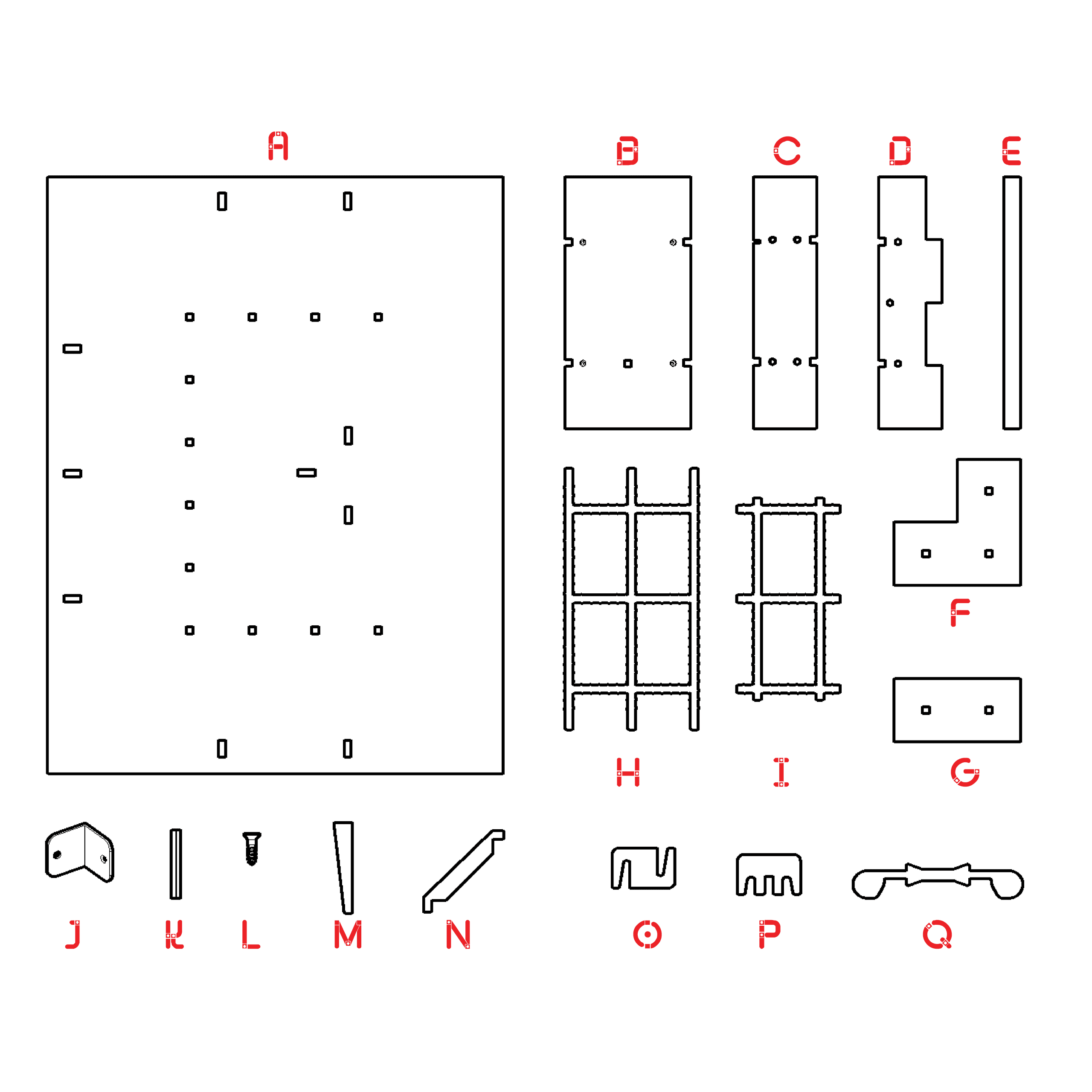
- ABase
- B10 @ Form Panel
- C2 @ Form End Panel
- D4 @ Form Corner Panel
- E6 @ Corner Post
- F2 @ Footing Corner
- G3 @ Footing Straight
- H4 @ Rebar Grid
- I3 @ Rebar Ladder
- J2 @ Corner Brace
- K12 @ Rebar Tie
- L60 @ #6 x 1/2" Flat Head Screws
- M10 @ Ground Stake
- N10 @ Panel Brace
- O12 @ S-Clip
- P30 @ E-Clip
- Q8 @ Snap Tie
Build Steps
Step 1
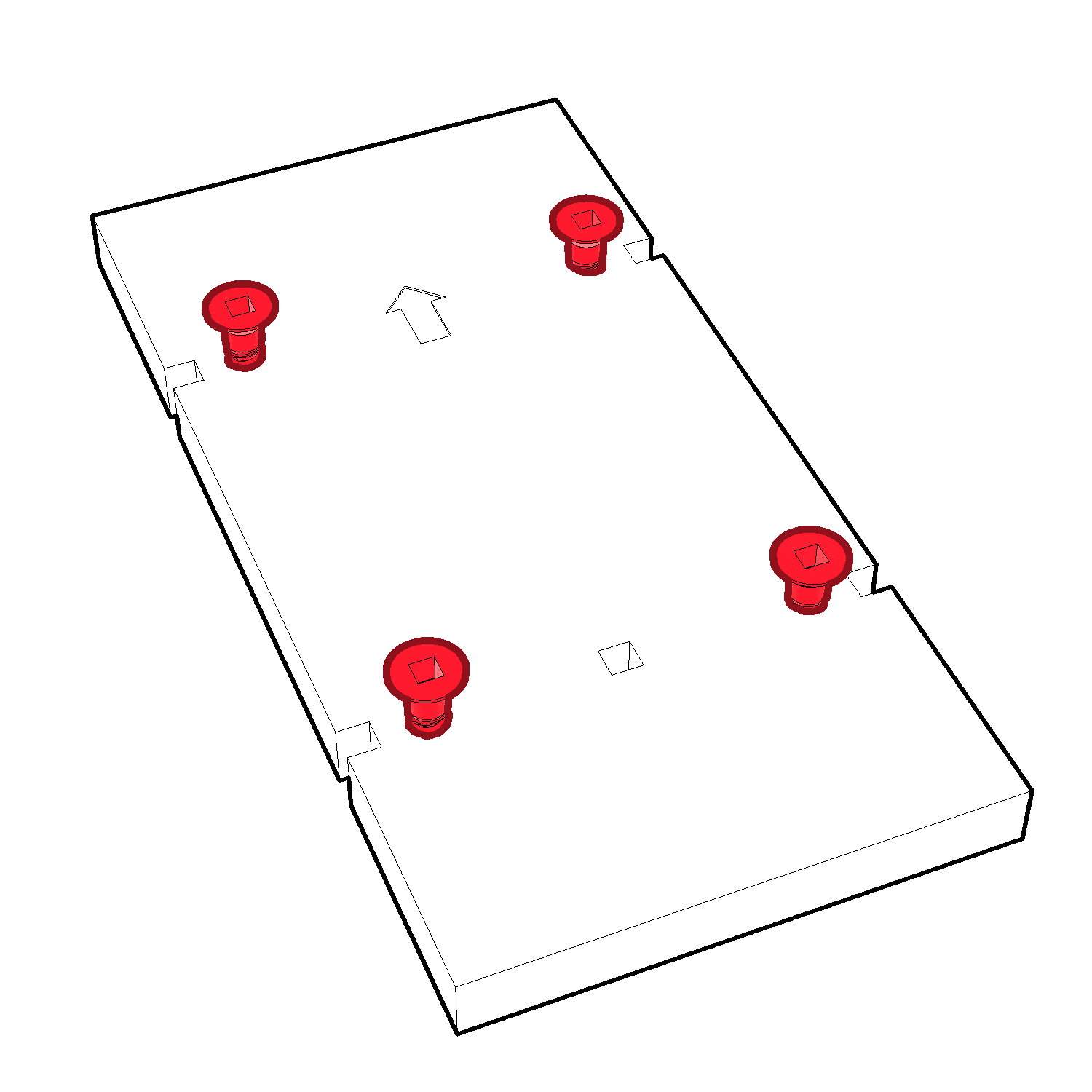
Using the screwdriver with the S1 bit, screw 4 screws (L) into the Form Panel (B). There are 10 panels to prepare for your formwork
Note - For panel screws, only screw them in until they aren't quote poking through the back of the form panel.
Note - For panel screws, only screw them in until they aren't quote poking through the back of the form panel.
Step 2
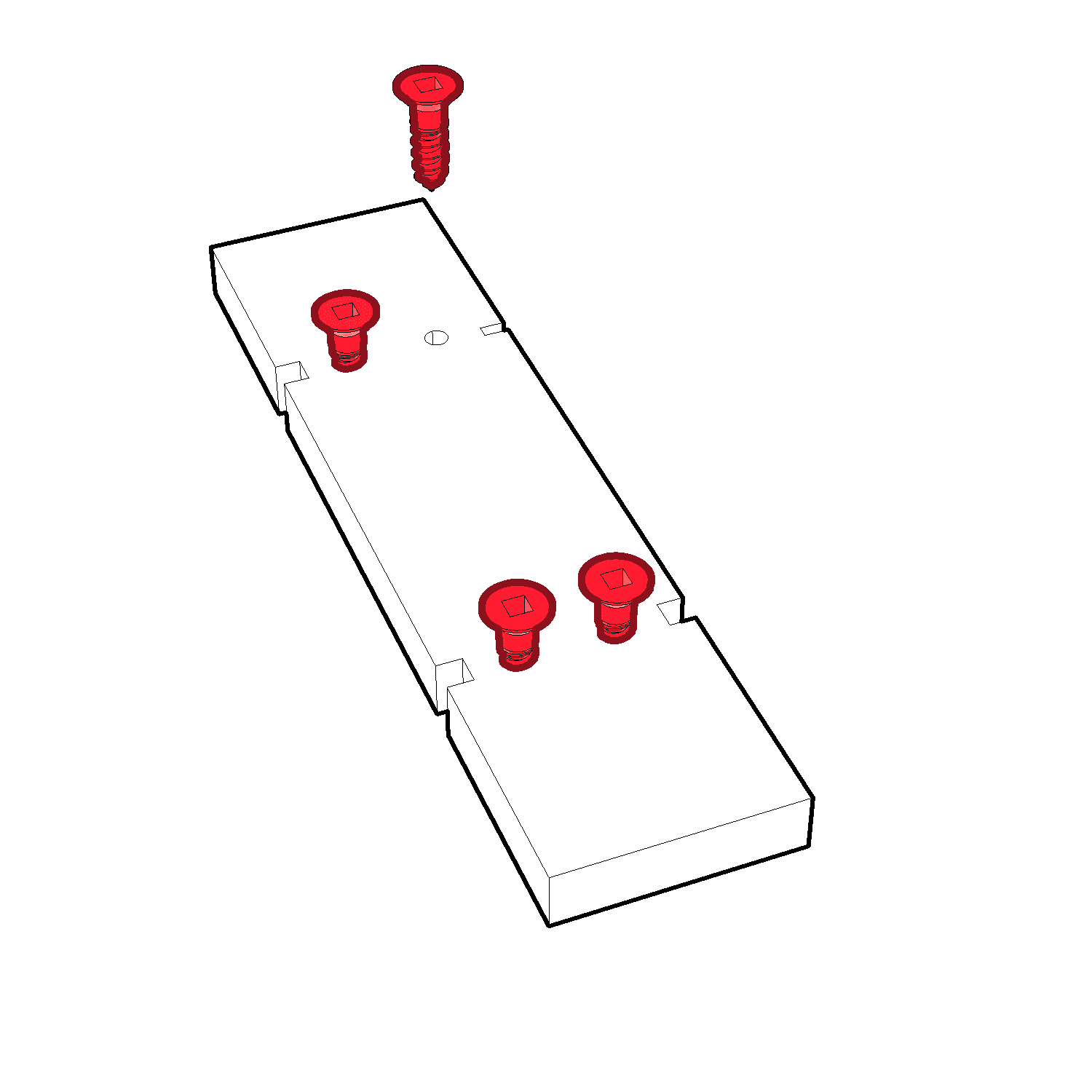
Using the screwdriver with the S1 bit, screw 4 screws (L) into the Form End Panel (C). There are 2 panels to prepare for your formwork
Step 3
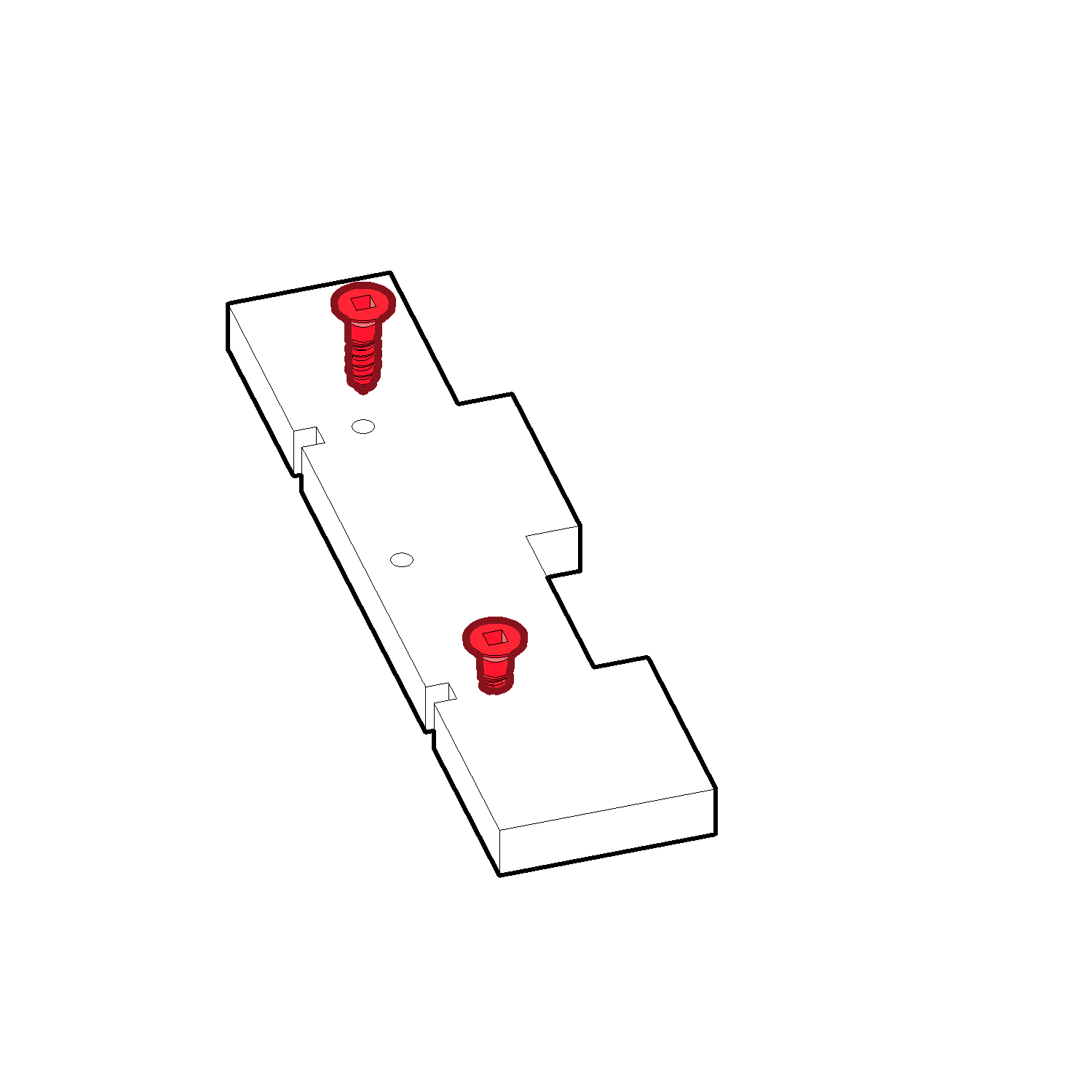
Using the screwdriver with the S1 bit, screw 2 screws (L) into the Form Corner (D). There are 4 panels to prepare for your formwork. Leave the middle hole empty for the next step
Step 4
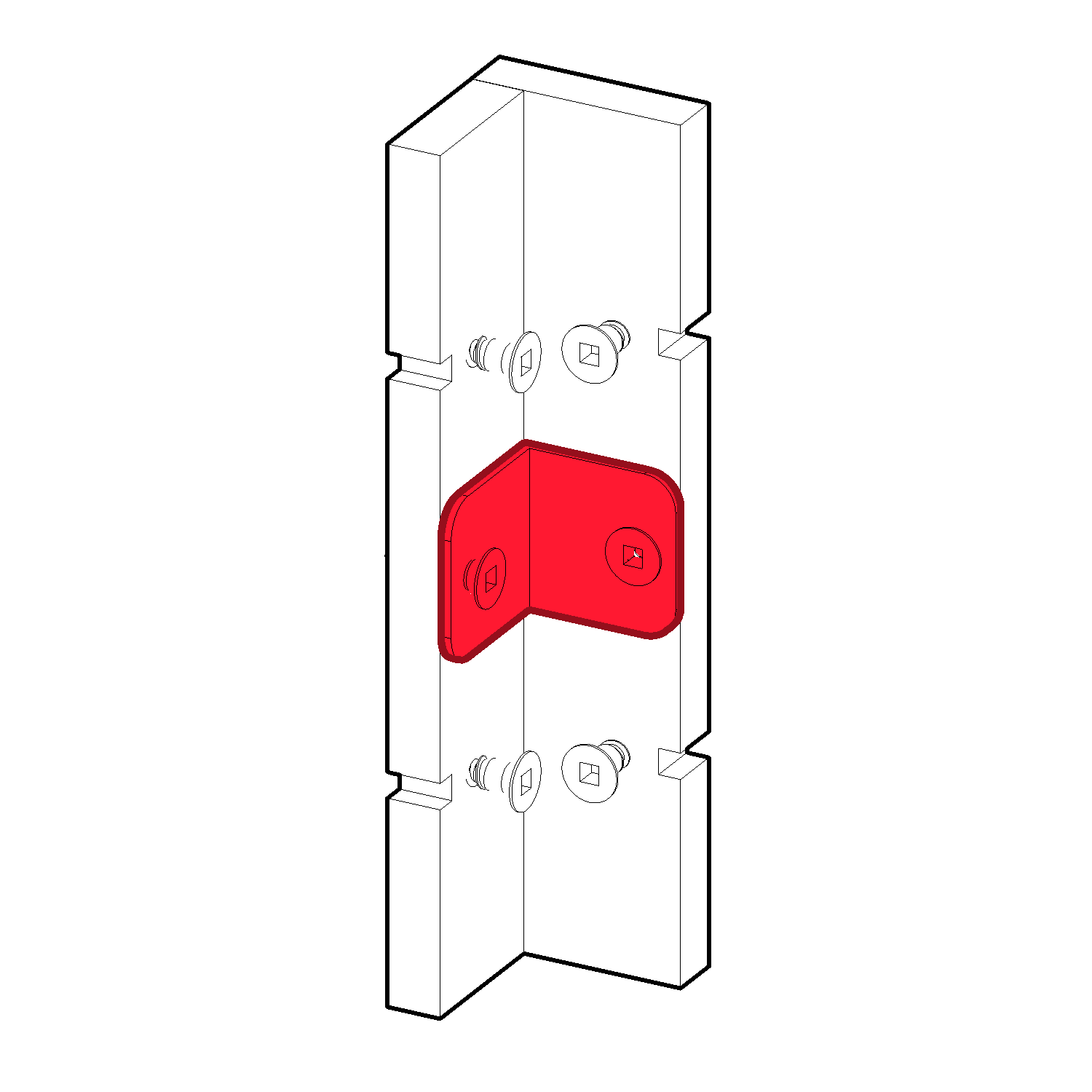
Connect your 2 Form Corner Panels (D) using the Angle Brace (J) using 2 screws (L).
Note - You will need to screw these in tightly. They will poke through the back of the Panels a small amount.
Note - You will need to screw these in tightly. They will poke through the back of the Panels a small amount.
Step 5
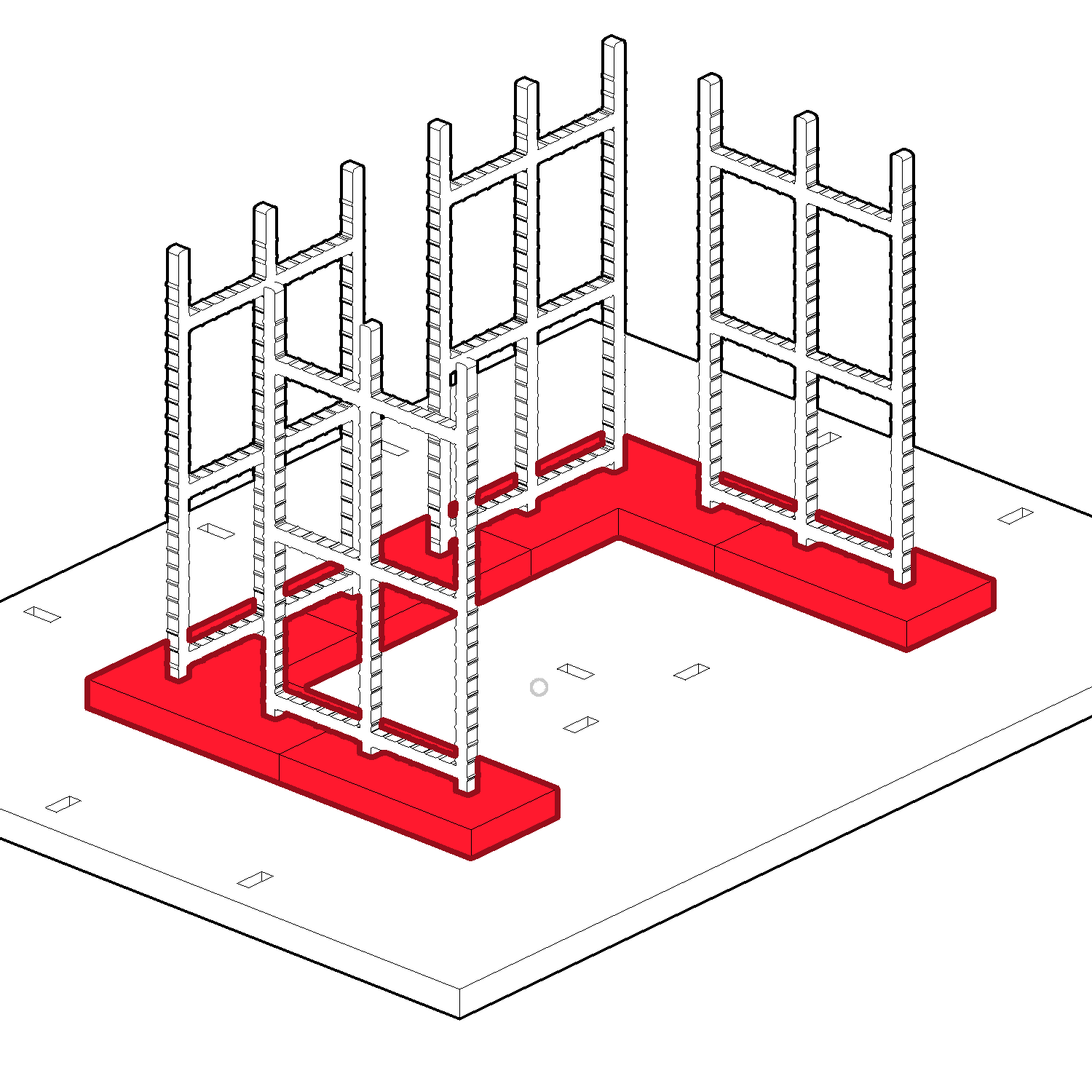
Arrange the Footing Corners (F) and Footing Straight (G) pieces onto the Base (A).
Hold them into the square holes in the Base (A) using 4 Footing Grids (H).
Note - The vertical dowel rods will fit through the footing pieces into the base.
Hold them into the square holes in the Base (A) using 4 Footing Grids (H).
Note - The vertical dowel rods will fit through the footing pieces into the base.
Step 6
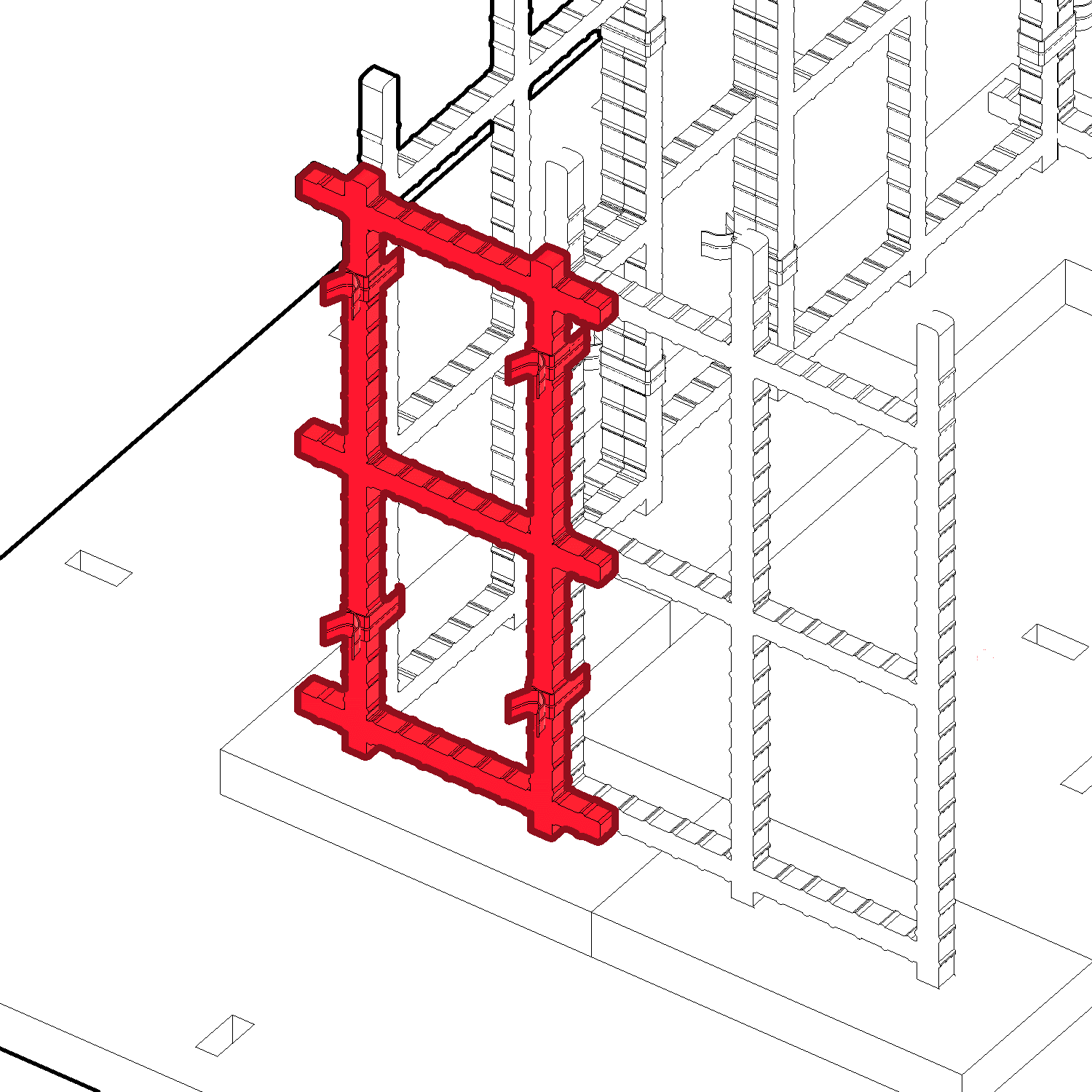
Tie the 3 Footing Ladders (I) to the gaps between the Rebar Grids (H) using the Rebar Ties (K)
Step 7
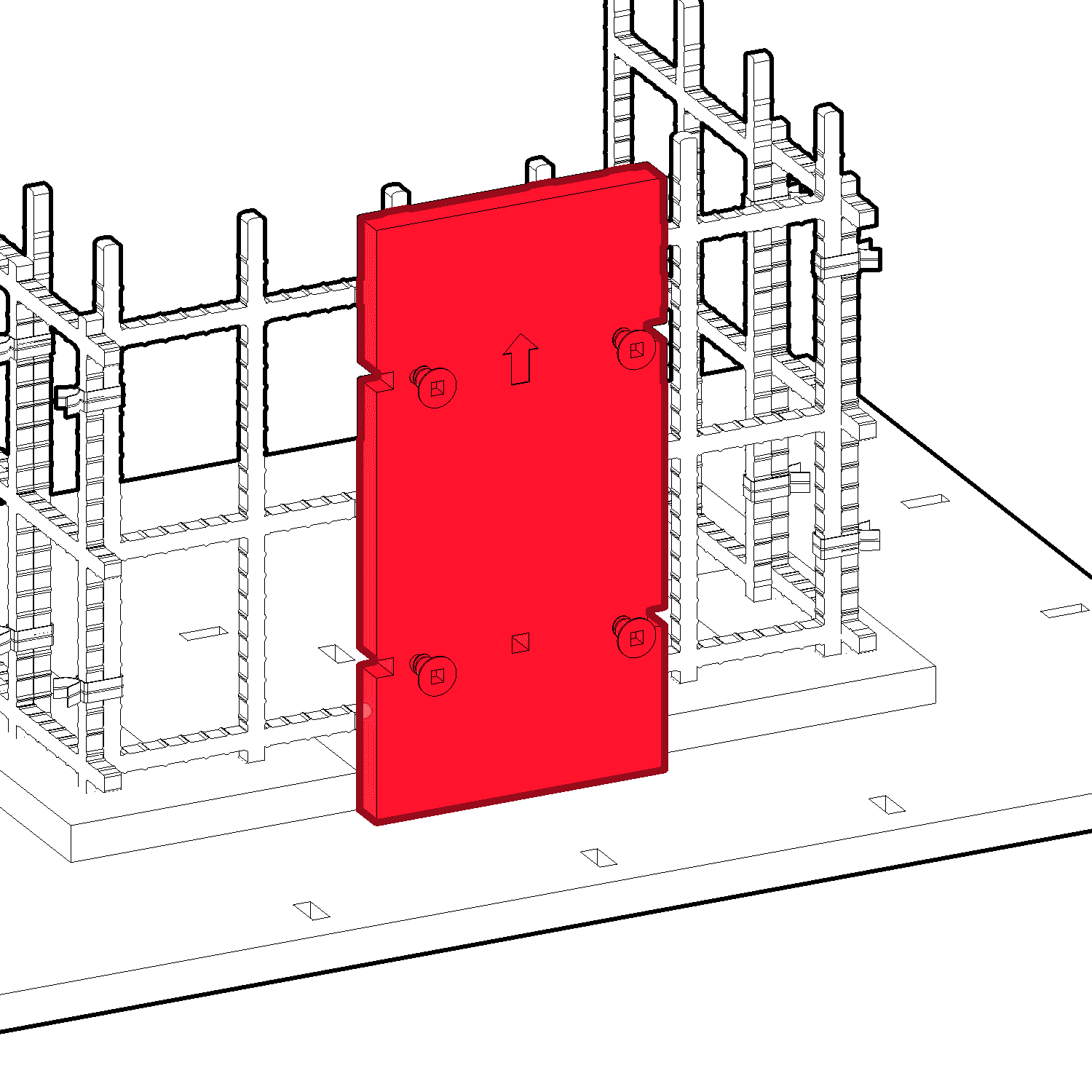
For the next steps we will cover how the components fit together. Arranging in your specific footing pattern is up to you. You can Produce a "U" addition, a straight wall or a corner.
Each Panel (B,C or D) will fit against the Footing Corner and Footing Straight pieces.
Each Panel (B,C or D) will fit against the Footing Corner and Footing Straight pieces.
Step 8
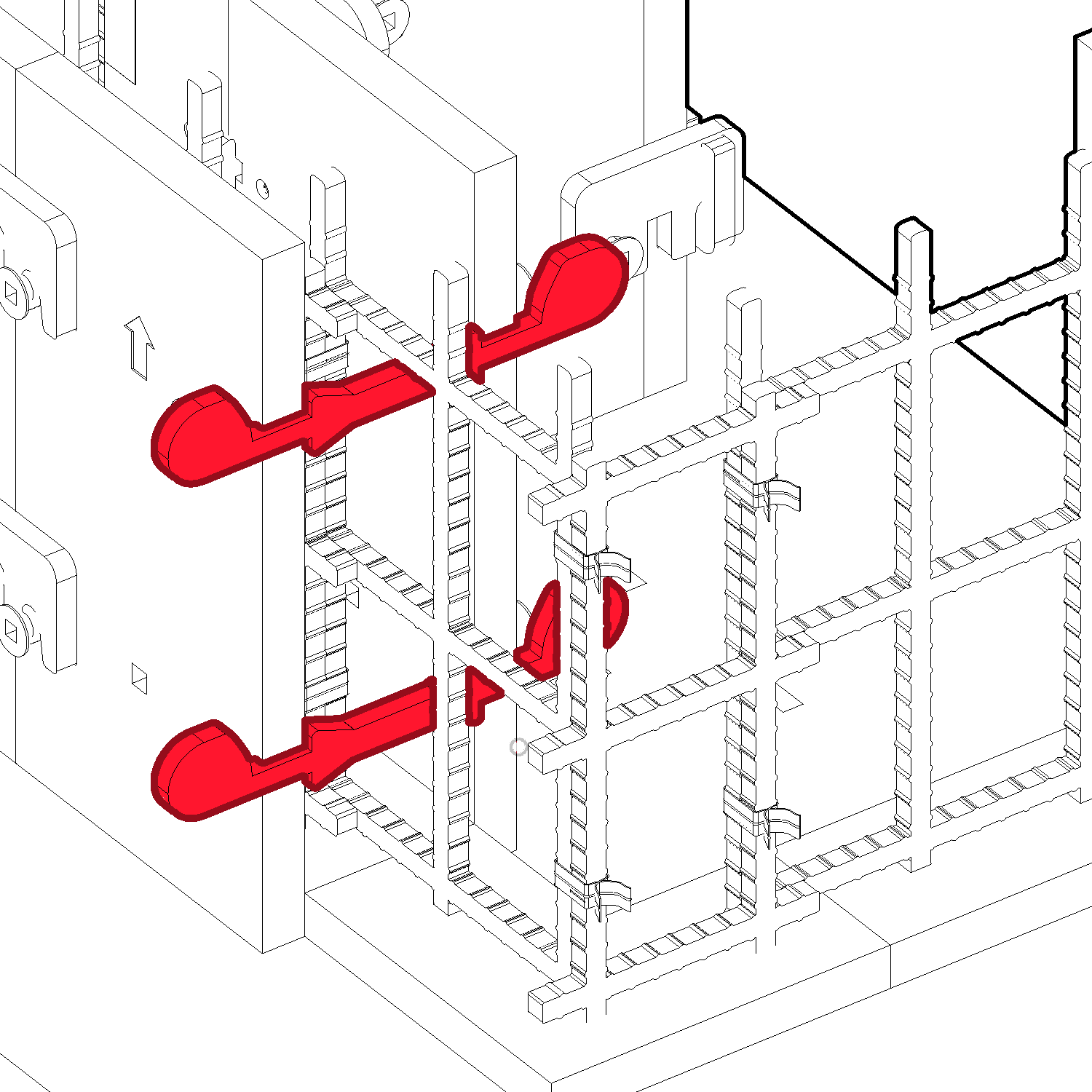
Before Placing the next panel in a form section, Snap-Ties (Q) are placed in-between opposing form panels.
Step 9
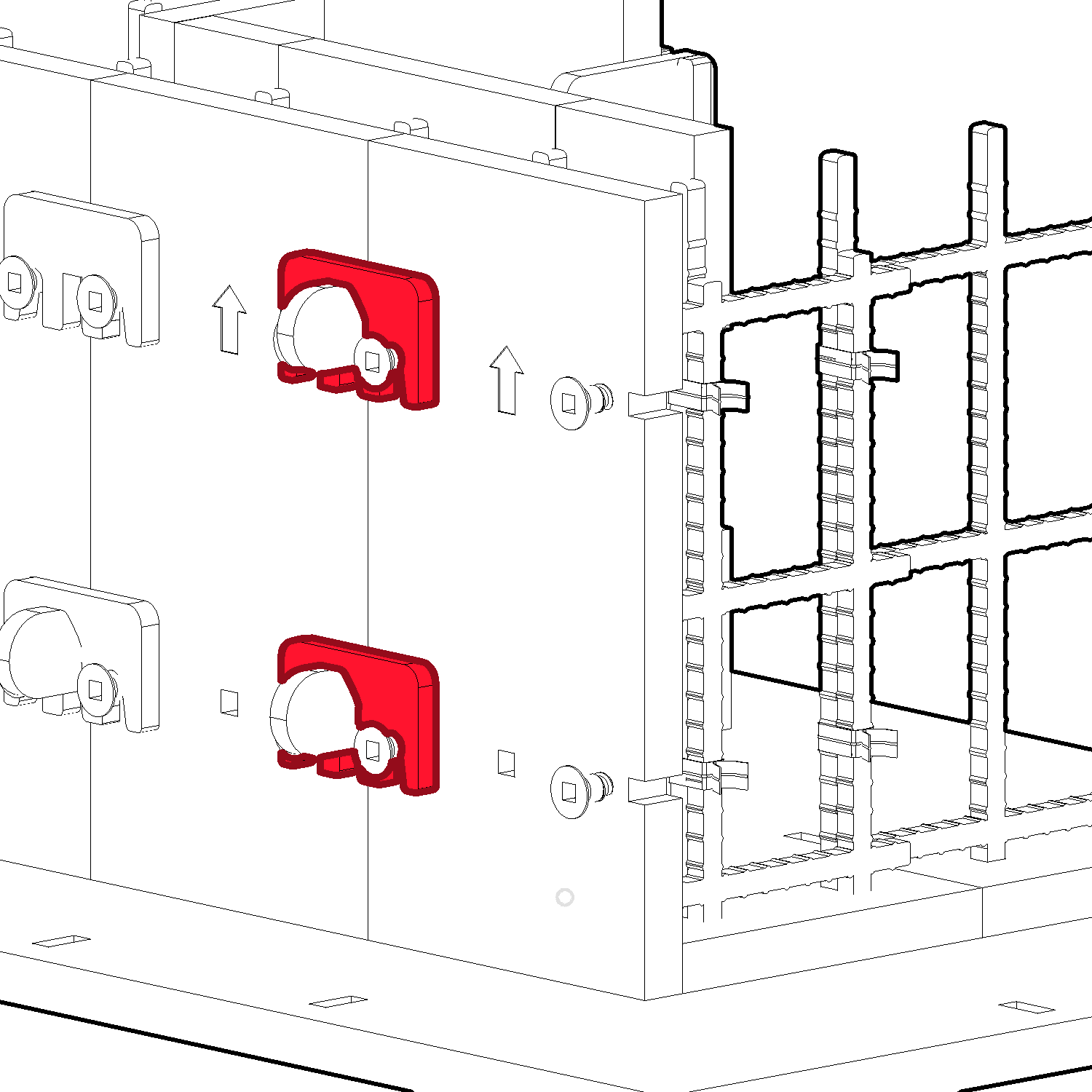
To Connect in-line form panels, use the E-Clips (P) by pressing them down from the top.
Step 10
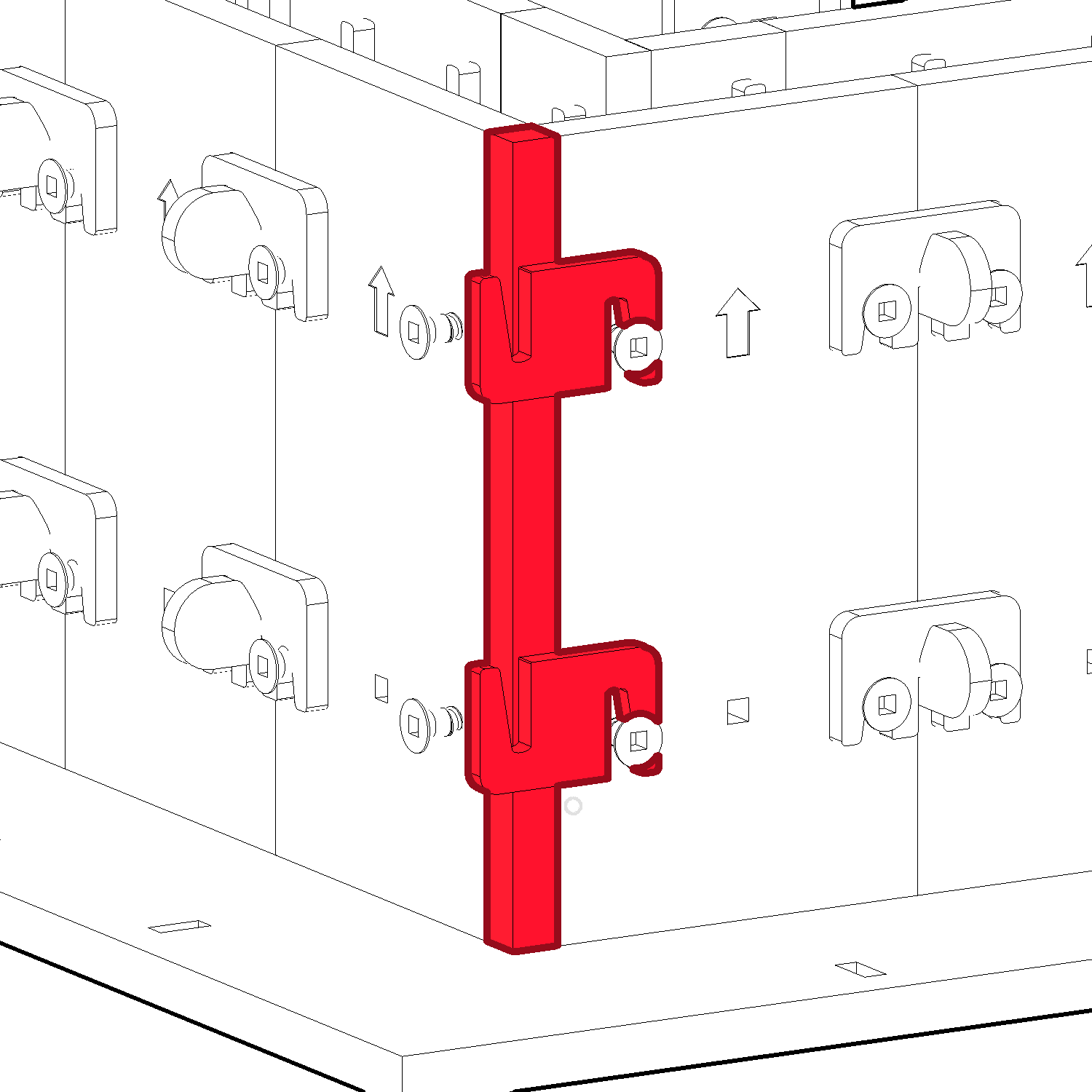
To Join an outside corner, first place a Corner Post (E) and 2 S-Clips (O).
Step 11
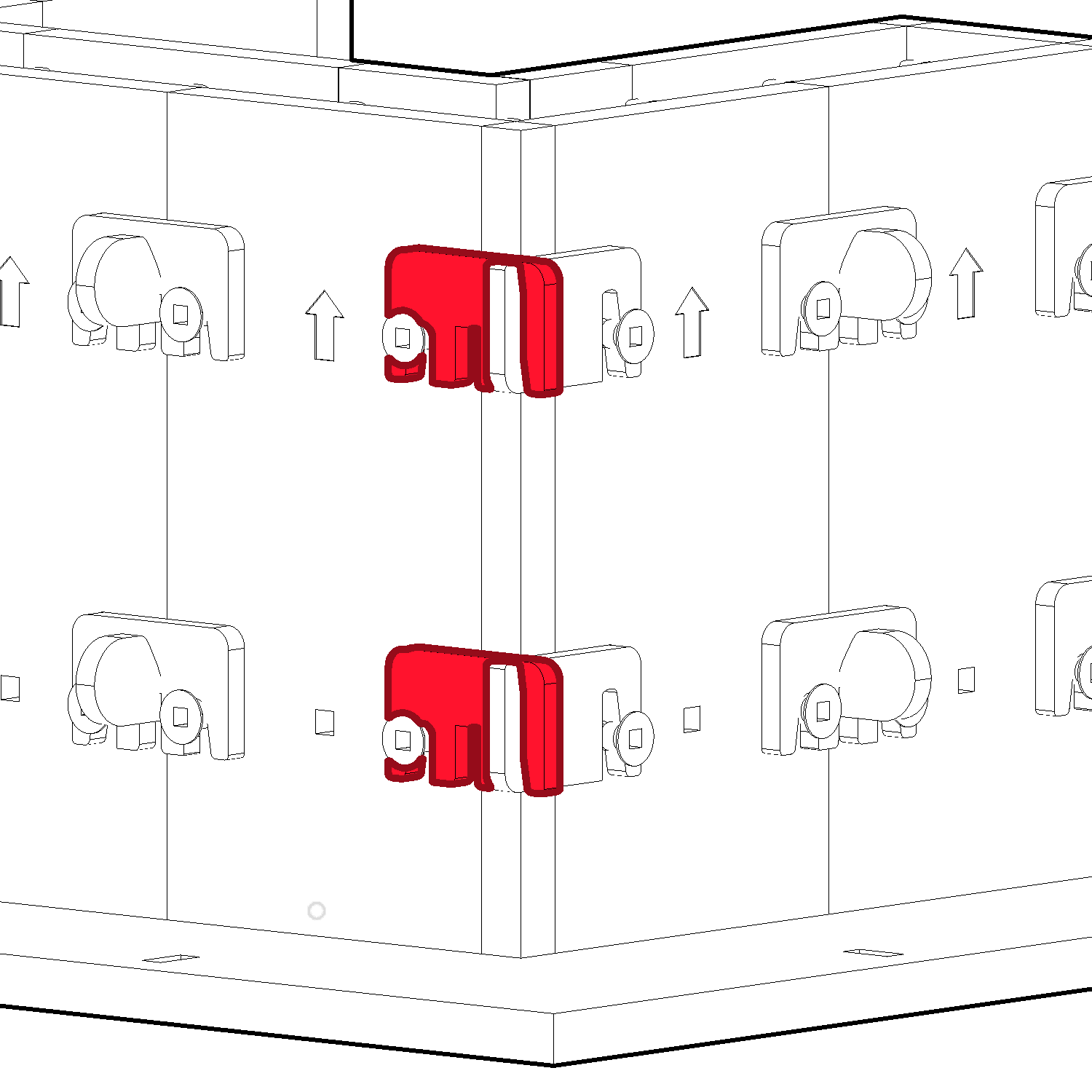
Connect the corner using 2 E-Clips (P) to hook over the corner S-Clips (O)
Step 12
To create wall end, use the narrower Form End (C) along with 4 S-Clips (O). Then join to the Form Panels using E-Clips (P)
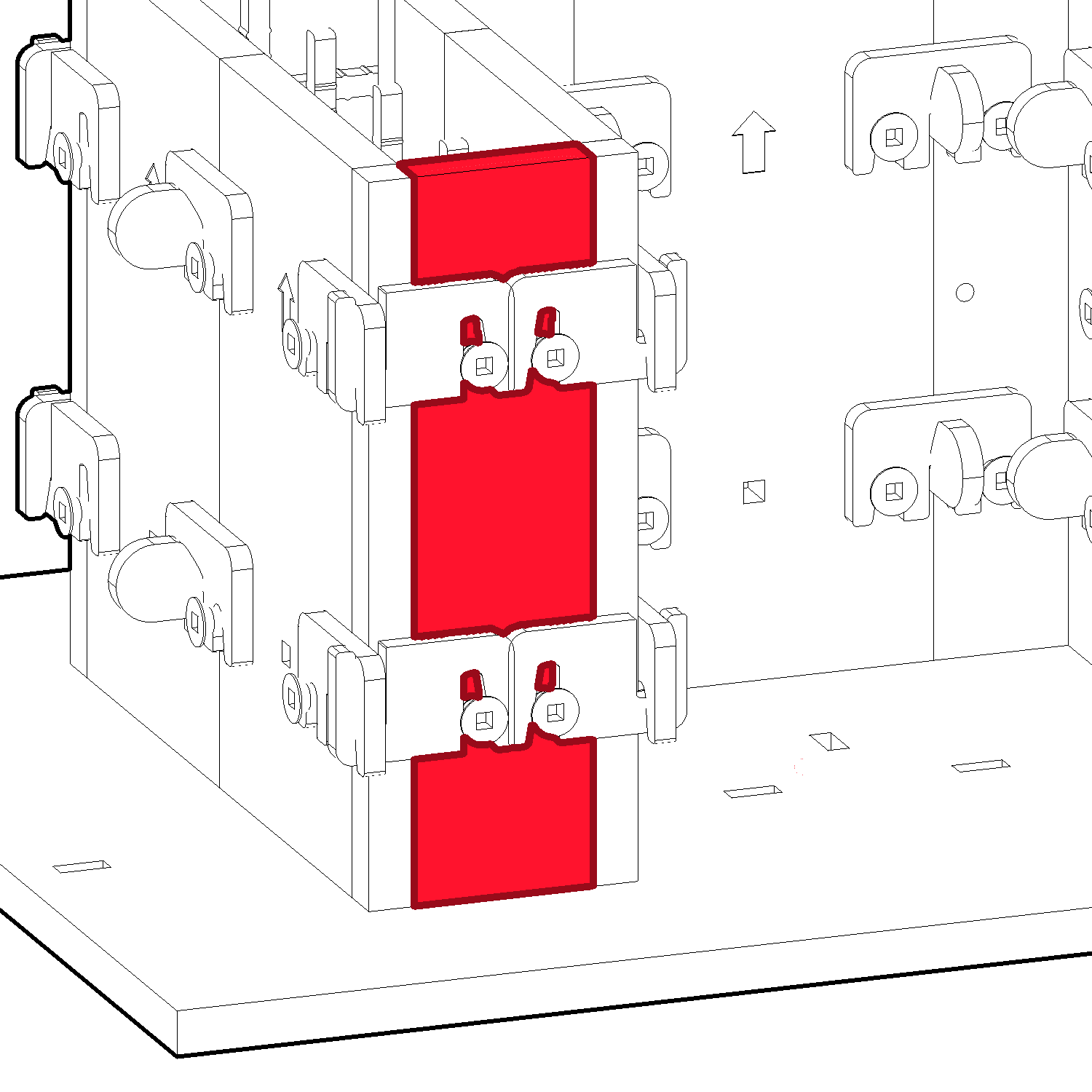
Step 13
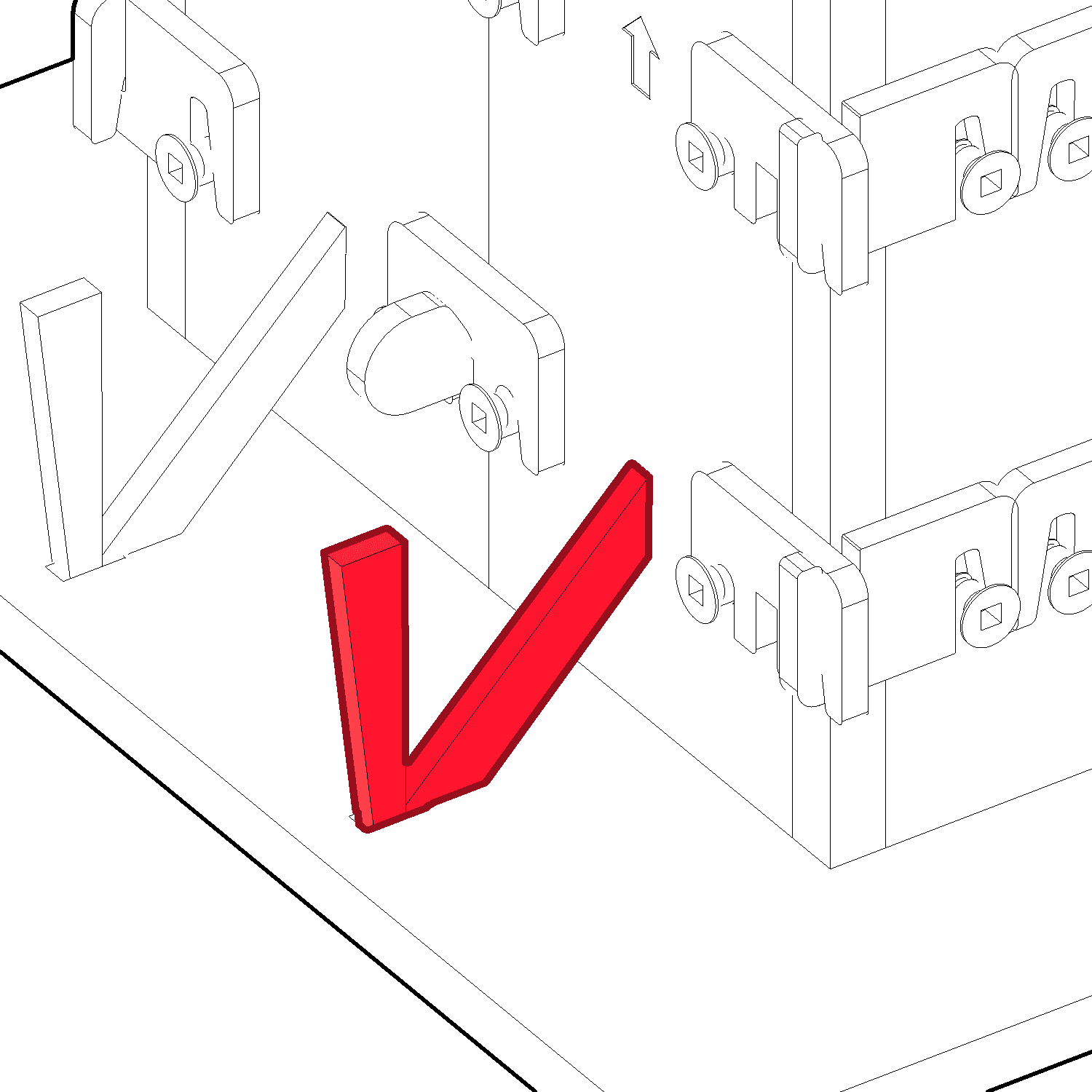
Add bracing to your form using the Panel Braces (N) and the Ground Stake (M) to secure the formwork.
Note- These can be helpful to install as you assemble your formwork.
Note- These can be helpful to install as you assemble your formwork.
Assessment
- What is the purpose of formwork, and why does it need to be strong and properly aligned before concrete is poured?
- How do snap ties and braces help keep the formwork stable, and what might happen if they are not installed correctly?
- Why is reinforcement (like rebar or mesh) placed inside the formwork, and how does it improve the final concrete structure?
- When assembling the kit, what steps did you take to make sure your walls were positioned at the correct angles?
- If you found that one side of your formwork was leaning or misaligned, what adjustments would you make to fix it?
 English
  French